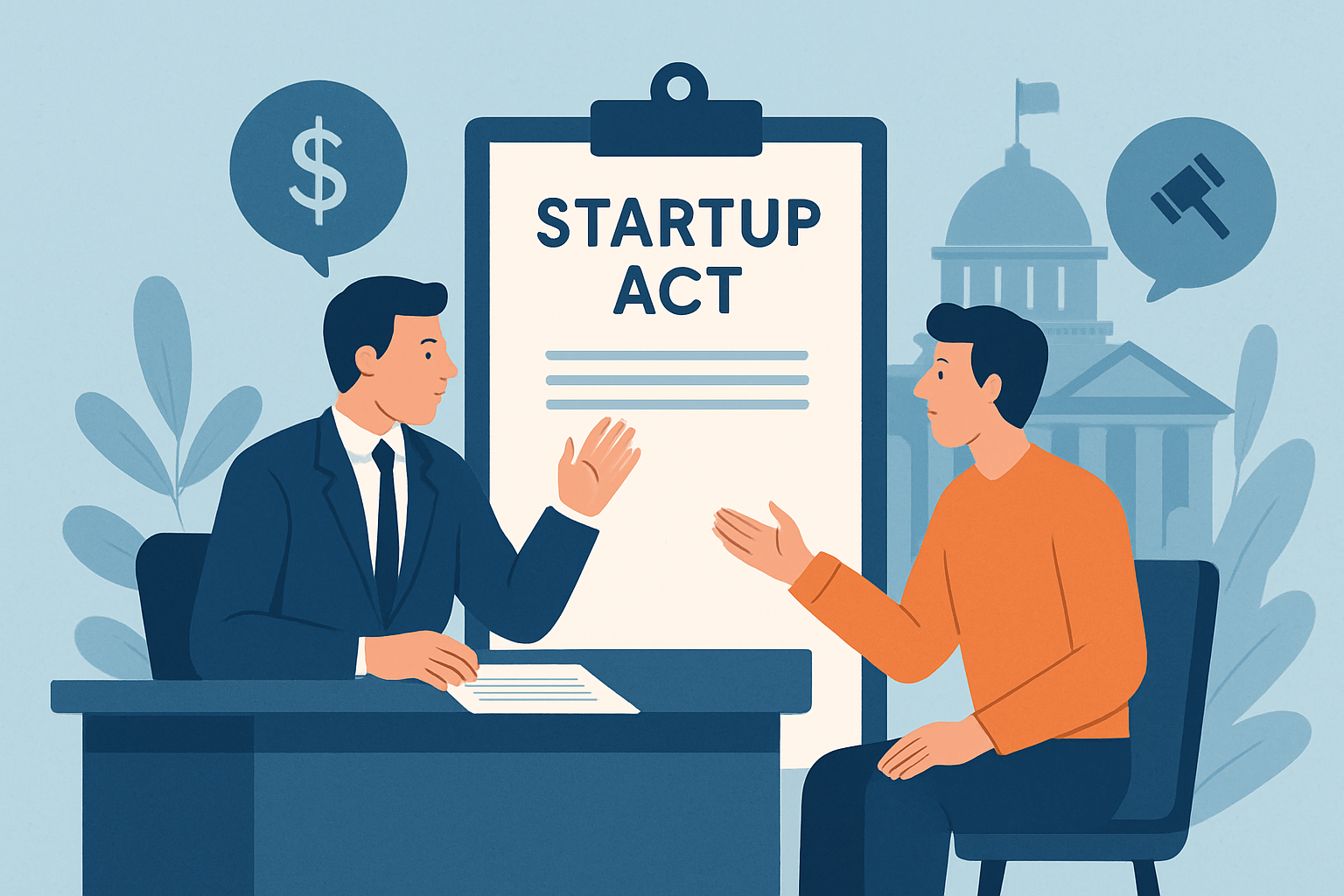

Startup Acts are more than just policy documents—they are public declarations that a government values and supports startups. While some Acts introduce tangible legislative reforms, others remain largely symbolic. But even symbolic Startup Acts send a powerful signal to entrepreneurs, investors, and the global community that startups are a national priority.
The best Startup Acts go beyond declarations. They address barriers holding back local startup ecosystems, such as limited access to capital, excessive regulatory friction, or infrastructure gaps. In many cases, Startup Acts become especially relevant where traditional legal frameworks make startup growth difficult, for example in ecosystems that lack cross-border payment infrastructure or that impose complex tax rules.
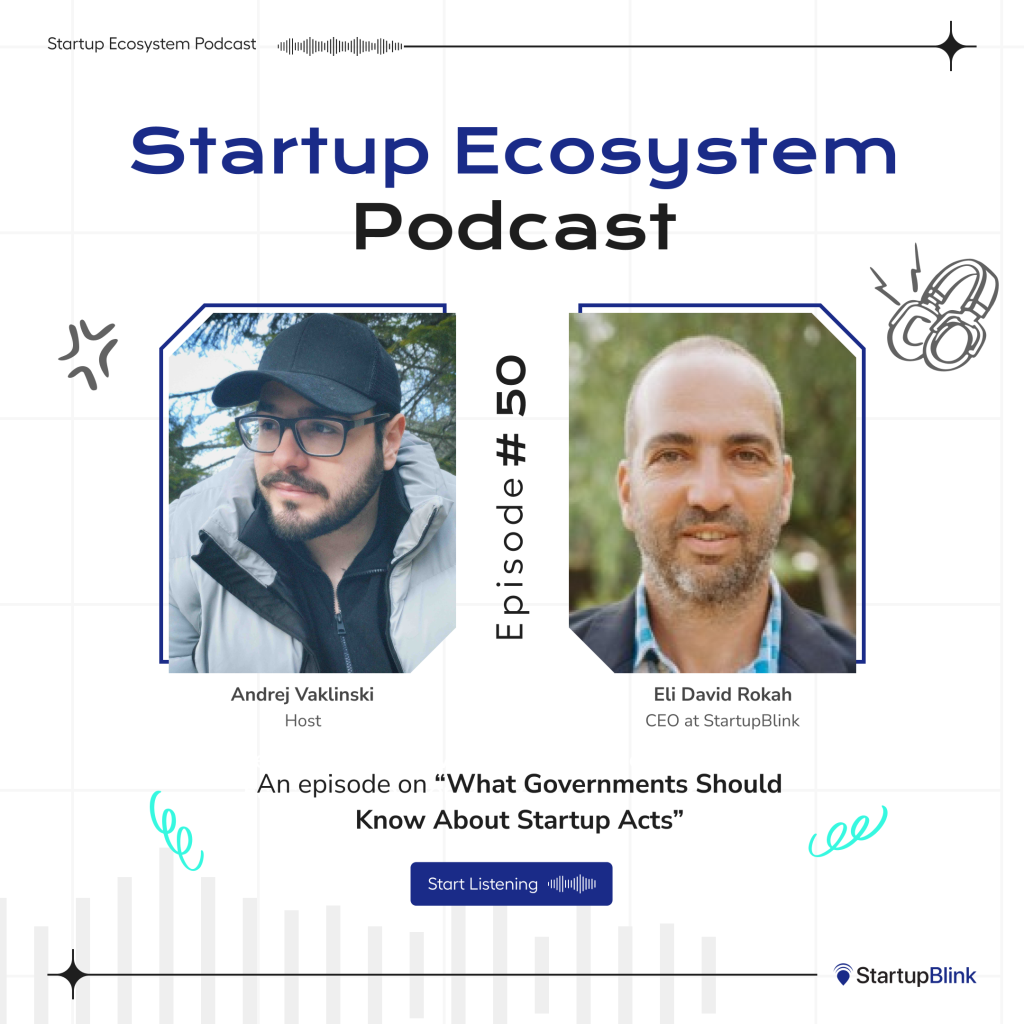
Get a head’s up on our next podcast episode — Subscribe on Apple Podcast, or Spotify!
One Size Doesn’t Fit All
Governments often fall into the trap of copying Startup Acts from other countries. While this may seem like a shortcut, it usually does more harm than good. Each startup ecosystem has its own set of challenges and opportunities, so any meaningful Startup Act must be customized to local needs.
The worst-case scenario? Startup Acts that introduce new rules and priorities without solving real problems. For example, emphasizing abstract concepts like diversity in an underdeveloped ecosystem could add bureaucracy without helping founders succeed. In some cases, Startup Acts can even increase the number of regulatory hoops founders must jump through.
The best Startup Acts start with analysis, talking to entrepreneurs, identifying local pain points, and pinpointing friction in the system. Without that groundwork, the Act risks becoming a list of lofty goals with no practical benefit.
Building a Better Business Environment Through Startup Acts
The most important factor to a startup ecosystem is a favorable business environment. Startup Acts should target the basics: making it easier to open and operate a business, reducing barriers to cross-border payments, easing legal compliance, and facilitating access to capital.
Governments should avoid micromanaging individual startups or handing out targeted grants. Instead, they should improve the conditions for all entrepreneurs. If that’s done well, founders will have fewer obstacles to overcome.
Countries like the United States and Singapore have grown strong ecosystems without needing formal Startup Acts. Why? Because they already provide a frictionless environment for business. Startup Acts become essential only in places where structural issues hold startups back.
Even in well-developed ecosystems, there are lessons to learn. Startup success rates are notoriously low, even in optimal conditions. Introducing more administrative burden only makes those odds worse. Therefore, one of the key principles of effective startup policy is “do no harm.”
How to Know If a Startup Act Is Working
Successful Startup Acts are well-received by the ecosystem. If founders publicly support the Act because it solves their real problems, it’s likely working. But if entrepreneurs ignore it or complain that it adds more red tape, then it’s not doing its job.
An average Startup Act might simply be ignored but still have some symbolic value. A bad Startup Act will make life harder for startups. A good one will reduce friction, improve business conditions, and receive praise from local founders.
Look for community feedback. Are entrepreneurs discussing the Act positively? Has it removed a known obstacle? Those are the signs of meaningful impact. The opposite, lack of implementation, confusion, or added bureaucracy, signals a missed opportunity.
Startup Acts as Legal Loopholes
In countries with outdated or complex legal frameworks, a Startup Act can serve as a temporary workaround. By creating startup-specific exemptions or fast-track processes, governments can support entrepreneurs while working on long-term reforms. In this context, the Startup Act is a way to partially fix systemic issues without rewriting entire legal codes.
Some Acts introduce policies like reduced taxes, simplified licensing, or less stringent employment regulations for startups. These can be beneficial, but governments must be cautious. Overly generous terms can lead to misuse or create loopholes that other types of businesses exploit.
Implementation Challenges
Passing meaningful Startup Acts isn’t easy. Startups are subject to the same rules as other businesses, so introducing new policies for them can create legal loopholes or political pushback. For example, if startups pay lower taxes, others will want the same treatment.
Additionally, business-friendly reforms often face resistance from incumbents who benefit from the status quo. These groups may lobby against changes that disrupt their market position.
To avoid these pitfalls, governments should:
- Start small, targeting the most pressing and widely agreed-upon issues.
- Conduct deep analysis to identify structural problems.
- Speak directly with founders to understand what’s blocking their success.
- Avoid overpromising and underdelivering—implement only what can realistically be enforced.
Cultural Fit and Customization
Every country has its own culture, legal system, and economic structure. Startup Acts should reflect these realities. A generic, one-size-fits-all Act will likely be ignored or ineffective. In contrast, a tailored approach built on detailed local research and stakeholder input is much more likely to succeed.
Respecting local norms is key. A country with a strong informal economy, for instance, might benefit more from formalizing support systems than from introducing high-tech startup accelerators. Likewise, countries with capital restrictions may need to focus on enabling cross-border financial infrastructure.
Final Advice for Policymakers
- Know if you need one: Not every country does. Some may already have a friendly business environment.
- Use it as a signal: Even a symbolic declaration can be valuable.
- Focus on the real pains: Identify and prioritize the 20% of issues causing 80% of the friction.
- Keep it simple: Solve one or two big problems first.
- Don’t create more complexity: Avoid turning the Act into a bureaucratic burden.
- Consult your ecosystem: Founders know best what’s holding them back. Talk to them early and often.
Startup Acts are not magic solutions, but when done right, they can remove key obstacles and catalyze growth. Less is more. Focus on real problems, solve them effectively, and get out of the way.
If your objective is to analyze, map, promote, or activate your startup ecosystem, we invite you to explore our Ecosystem Development Services.
Download the latest Global Startup Ecosystem Index and The Corporate Startup activity Index reports covering over 1,400 ecosystems and 350 corporations at StartupBlink.com. For advanced insights, explore StartupBlink Pro.