
How do you compare a massive population country like China with a country like Estonia when analyzing startup ecosystems? One has over a billion people; the other, just over a million. This population gap makes direct comparisons difficult, especially when using raw startup counts.
To address this, the Global Startup Ecosystem Index (GSEI) uses a per capita-adjusted algorithm, which evaluates startup activity relative to population size. This method highlights countries that are highly efficient and innovative regardless of their scale, allowing smaller nations like Estonia to stand out.
In contrast, The Absolute Power Report focuses on the absolute power of startup ecosystems. We measure total startup output without adjusting for population, offering a clear view of which countries and cities are generating the largest volumes of startup activity.
Together, these perspectives provide a more complete understanding of global startup dynamics. In this report, we dive into the unadjusted data to uncover the world’s most powerful ecosystems by pure output.
For a deeper dive into this topic, check out our latest episode of the Startup Link Ecosystem Podcast. StartupBlink CEO Eli David Rokah joins host Andrej Vaklinski to discuss the Absolute Power of Startup Ecosystems Report, how it differs from the Global Index.
Get a head’s up on our next podcast episode — Subscribe on Apple Podcast, or Spotify!
About the Absolute Power Report
While the Global Startup Ecosystem Index adjusts scores for population to reflect ecosystem efficiency, this Absolute Power Report strips away those adjustments to spotlight sheer size. It shows which nations are contributing most to the global startup economy in terms of volume, regardless of how efficiently they do it.
This approach is especially useful for identifying global leaders and rapidly scaling ecosystems that may not yet be efficient per capita, but wield major influence due to their massive scale.
In addition to total scores, the report introduces the Annual Growth Rate, a new metric tracking year-over-year growth in total output between April 2024 and April 2025.
Top 5 Countries Leading in Absolute Startup Output
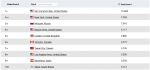
The United States ranks first by a massive margin, with an absolute startup output score more than five times higher than China, the second-ranked country. No other ecosystem comes close to the U.S. in terms of total volume.
China holds second place and also records the fastest growth in the group, with a 54.6% year-over-year increase. India is one of the biggest surprises in the top 5 — despite ranking only 22nd in per capita performance, it rises to 4th place in absolute output, thanks to the massive scale of its startup activity.
Global Startup Activity Share by Country
The global startup landscape is heavily concentrated in just a few countries. The United States alone generates 46.6% of all startup activity worldwide, nearly half of the global total. Together with China (9.2%), the United Kingdom (5.6%), and India (5%), these four countries account for 66.4% of the absolute global startup activity.
Absolute Growth Leaders
While the United States remains the largest ecosystem by scale, other countries are showing remarkable growth momentum. China leads the world in absolute growth among the top 15 ecosystems, expanding by 54.8% year-over-year. Singapore (49.4%) and Japan (48.8%) follow closely and in Europe, France (36.1%) and Spain (35.9%) emerge as the fastest-growing.
Key Regional Leaders
North America – United States
The United States is the undisputed leader in North America and globally. Its startup ecosystem generates more activity than any other country, maintaining the top position in both total output and per capita performance. Despite already being the largest ecosystem, it continues to grow steadily.
Europe – United Kingdom
The United Kingdom holds the top spot in Europe for overall startup activity. While it is expanding at a slower rate than some of its continental neighbors, it remains the region’s most influential startup hub.
Asia-Pacific – China
China leads the Asia-Pacific region by a significant margin. It is not only the region’s largest ecosystem but also one of the fastest-growing globally, showcasing rapid expansion across all major startup indicators.
Latin America – Brazil
Brazil is the most active startup ecosystem in Latin America. It outpaces all other countries in the region by a wide margin, reinforcing its position as the dominant hub for startup activity in Latin America.
Middle East & Africa – Israel
Israel remains the leading startup ecosystem in the Middle East and Africa. It is also among the world’s top performers on a per capita basis, highlighting both its scale and efficiency in generating startup success.
Methodology
This report is based on data from the Global Startup Ecosystem Index 2025 by StartupBlink. As in the Global Ecosystem Index, each country receives a composite score based on several factors. However, in this case, the scores are not adjusted for population.
The Index evaluates ecosystems using a proprietary algorithm built around three main pillars:
Quantity Score | Quality Score | Business Environment Score |
|
|
|
Annual Growth Rate
In addition to rankings, this report incorporates the Annual Growth Rate, a key metric that measures the year-over-year change in each country’s absolute score between April 2024 and April 2025. This rate highlights which ecosystems are expanding most rapidly in terms of total startup activity.
Guiding Principles
Our rankings are based solely on objective, comparable data. We focus on measurable results, not theoretical models, and update our algorithm regularly to reflect real-world changes in startup ecosystems. We adjust scores when large amounts of new data are added at once, so rankings reflect true ecosystem growth, not just a temporary data boost.
Data Sources
Our data is collected from three primary sources:
- Global Data Integrations: We partner with leading data providers like Crunchbase to enrich our platform with verified startup and funding data across thousands of locations.
- Government & Public Sector Partnerships: We collaborate with over 100 government agencies and economic development organizations worldwide, particularly in regions with limited existing data to validate and expand local ecosystem coverage. Contact us to join them.
- Crowdsourced Submissions: Startups, coworking spaces, accelerators, and other ecosystem entities can add themselves to the StartupBlink map, helping build a global, up-to-date directory.