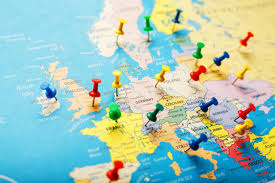
The best startup ecosystems in Europe in 2026 show where startup activity, investment, innovation, and ecosystem support are strongest across the region. Based on the StartupBlink Global Startup Ecosystem Index 2026, this ranking highlights Europe’s leading startup countries and cities, helping founders, investors, and ecosystem builders understand where the region’s strongest startup hubs are located.
Because startup ecosystem strength is not always concentrated in the same way, this article looks at both countries and cities. Country rankings capture national startup ecosystem performance, while city rankings measure the absolute strength of individual startup hubs.
In 2026, the United Kingdom is the top startup country in Europe, while London is the top startup city in Europe. Sweden ranks as the leading startup ecosystem in the European Union, and Paris is the highest-ranked startup city in the EU. Spain recorded the fastest growth among Europe’s top 10 startup countries, while Istanbul was the fastest-growing city in Europe’s top 10.
Want to see rankings beyond the top 10?
Top Startup Countries in Europe in 2026: Key Findings
The United Kingdom remains Europe’s leading startup country with a total score of 80.114, nearly twice Sweden’s and more than double Germany’s. Sweden remains second and continues to lead the European Union, while Germany holds third place.
The main movement came just below the top three. Switzerland rose to fourth, its highest position in five years, while the Netherlands rose to fifth. Both countries overtook France, which moved down two places to sixth after recording the slowest growth rate among Europe’s top 10 startup countries.
Spain posted the strongest growth in Europe’s top 10 at +19.3%, reinforcing its position as Southern Europe’s leading startup ecosystem. Just outside the top 10, Denmark recorded +31.3% growth, higher than every country in the leading group.
Top 10 Startup Countries in Europe in 2026
Geographically, Northern, Western, and Central Europe account for most of the country top 10. Spain is the only Southern European country in the leading group, while Estonia is the only Baltic country represented.
Top 10 Countries for Startups in 2026

1. United Kingdom
Europe rank: 1 • Total score: 80.114 • Annual growth: +13.2%
The United Kingdom remains Europe’s leading startup country by a wide margin. Its total score is nearly twice Sweden’s and more than double Germany’s, while its ecosystem value of US$996.9B is also the highest in Europe by far.
The UK’s dominance is closely tied to London, which gives the country an unusually powerful lead hub. The ecosystem remains highly concentrated, with London scoring 16 times higher than Manchester, the UK’s second-ranked city. This level of concentration helps explain the size of the UK’s lead, while steady 13.2% growth keeps it comfortably ahead of the rest of Europe.
2. Sweden
Europe rank: 2 • Total score: 40.781 • Annual growth: +15.5%
Sweden ranks second in Europe and remains the highest-ranked startup country in the European Union. Its position is especially notable because its ecosystem value, at US$152.4B, is lower than that of several countries ranked below it.
That gap between rank and value makes Sweden one of Europe’s most effective startup ecosystems in score terms. Stockholm sits clearly at the top of the national ecosystem, with a total score 6.7 times higher than Gothenburg, while Sweden’s total score remains about 8% ah
3. Germany
Europe rank: 3 • Total score: 37.644 • Annual growth: +13.5%
Germany ranks third in Europe and is the only country with two cities in the European top 10: Berlin in third and Munich in seventh. Both cities recorded negative growth in 2026, yet Germany’s national score grew 13.5%, suggesting that growth elsewhere in Germany is offsetting weaker results from its two flagship hubs.
This makes Germany one of Europe’s more distributed major startup ecosystems. Its strength is not limited to a single dominant city, and its continued country-level growth shows the depth of startup activity beyond Berlin and Munich.
4. Switzerland
Europe rank: 4 (▲1) • Total score: 36.108 • Annual growth: +13.7%
Switzerland rises from fifth to fourth in Europe, overtaking France and returning to the position it last held in 2021. Its movement is one of the most important ranking shifts in Europe’s top 10.
Unlike many leading European ecosystems, Switzerland does not rely on a single dominant city. Its startup ecosystem is highly decentralized: Zurich’s total score is just 1.9 times Lausanne’s, while the combined total scores of Lausanne and Zug exceed Zurich’s. That structure helps Switzerland rank fourth despite having no city in the European top 10 and a smaller ecosystem value than several countries below it.
5. The Netherlands
Europe rank: 5 (▲1) • Total score: 34.514 • Annual growth: +11.8%
The Netherlands rises one place to fifth, moving ahead of France by one of the tightest margins in Europe’s top 10. Its total score is less than 2% higher than France’s, making this one of the ranking’s closest contests.
The Dutch ecosystem grew 11.8% in 2026, comfortably outpacing France’s 4.7%. That stronger growth, rather than a major difference in scale, is what allowed the Netherlands to move ahead. With an ecosystem value of US$164.5B, the country remains smaller than France by value but more competitive in this year’s total score.
6. France
Europe rank: 6 (▼2) • Total score: 33.942 • Annual growth: +4.7%
France falls from fourth to sixth in Europe and also drops out of the global top 10. But this is not a story of shrinking scale. France remains one of Europe’s largest startup ecosystems by value, at US$369.9B — well above both Switzerland and the Netherlands, which overtook it in the ranking.
The reason for the shift is growth. France recorded +4.7% annual growth, the slowest rate among Europe’s top 10 startup countries, allowing faster-growing competitors to move ahead. The ecosystem also remains highly centralized: Paris is France’s only city in the global top 100 and has a total score 10.8 times higher than Lyon. France is still tightly packed in the table, sitting less than 2% behind the Netherlands and only about 1.5% ahead of Estonia.
7. Estonia
Europe rank: 7 • Total score: 33.437 • Annual growth: +8.8%
Estonia ranks seventh in Europe and remains the leading startup ecosystem in the Baltics. Its total score is only about 1.5% behind France, despite having the smallest ecosystem value in Europe’s top 10.
This makes Estonia one of the clearest examples of a country whose ranking significantly exceeds what ecosystem value alone would suggest. Its structure is also highly centralized, with Tallinn’s total score 18.1 times higher than Tartu’s, showing how much of the country’s startup performance is concentrated in its main hub.
8. Spain
Europe rank: 8 • Total score: 27.647 • Annual growth: +19.3%
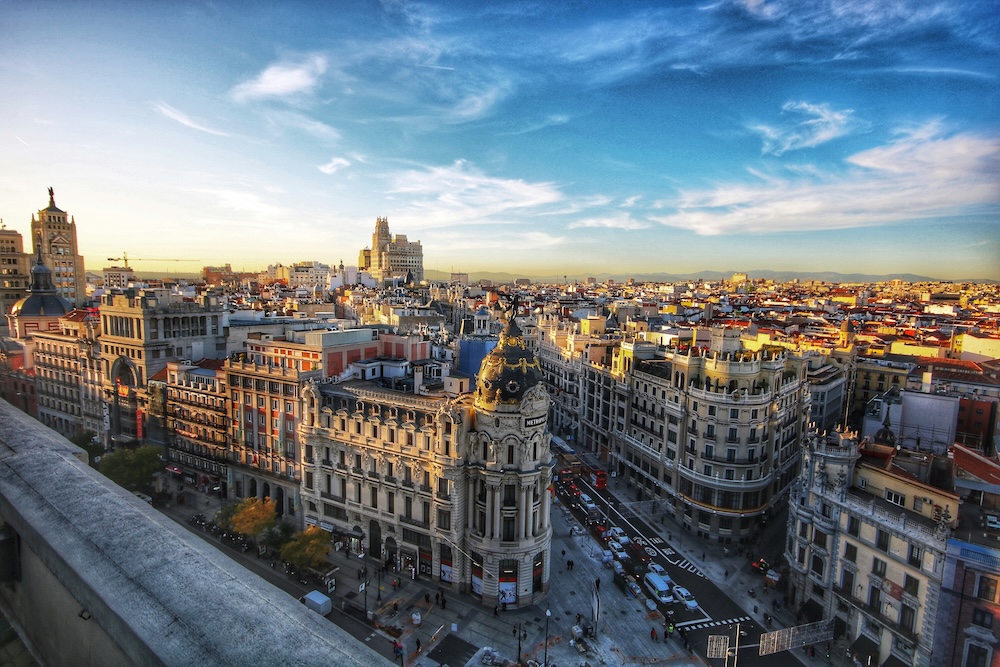
Spain is the strongest growth story inside Europe’s country top 10. It records +19.3% annual growth, the fastest rate among the leading group, while remaining the top-ranked startup ecosystem in Southern Europe.
Spain also has Europe’s fourth-largest ecosystem value in the top 10, at US$292.2B, despite ranking eighth by total score. Its structure is relatively decentralized: Barcelona’s total score is just 1.6 times Madrid’s, leaving the country with two mid-sized hubs rather than a single dominant centre. This broadens national startup activity, but also means Spain lacks the concentrated flywheel seen in ecosystems led by one globally dominant city.
9. Finland
Europe rank: 9 • Total score: 25.881 • Annual growth: +13.2%
Finland ranks ninth in Europe with a total score of 25.881 and annual growth of +13.2%. Its position keeps it ahead of Ireland, though the gap between the two remains relatively narrow.
Finland’s tier structure is clear: Helsinki stands alone at the top of the national ecosystem, giving the country a visible leading hub while supporting its continued place in Europe’s top 10.
10. Ireland
Europe rank: 10 • Total score: 24.303 • Annual growth: +14.5%
Ireland completes the European top 10 with a total score of 24.303. Its ecosystem value of US$58.2B is among the smaller values in the leading group, but its +14.5% annual growth is faster than Finland’s.
The ecosystem remains highly centralized, with Dublin’s total score roughly ten times that of Cork. Ireland’s ranking therefore depends heavily on the strength of its leading hub, though its growth rate shows that the country continues to gain score even from the bottom of Europe’s top 10.
Just Outside the Country Top 10: Denmark
Denmark ranks 11th in Europe, rising one place and sitting about 15% behind Ireland. Its +31.3% annual growth is higher than that of every country in Europe’s top 10, making it the strongest country-level momentum story just outside the leading group.
Want to see where every country ranks?
Top Startup Cities in Europe in 2026: Key Findings
London remains Europe’s top startup city by a wide margin, with a total score roughly 2.5 times higher than second-ranked Paris. Paris remains second and the highest-ranked startup city in the European Union, while Berlin holds third.
Several major hubs recorded negative growth in 2026, including Paris, Berlin, Munich, and Moscow. London’s lead therefore widened despite moderate growth of +5.4%.
Istanbul is the standout city mover of 2026, climbing three positions to enter Europe’s top 10 with +28.2% annual growth, the fastest rate among the leading cities. Madrid also moved closer to the top 10, rising two places to 11th with +12.5% growth.
Top 10 Startup Cities in Europe in 2026
1. London
Europe rank: 1 • Total score: 197.557 • Annual growth: +5.4%
London is Europe’s clear leading startup city, with a total score roughly 2.5 times that of Paris. This creates the largest gap between any two adjacent cities in the European top 10.
Its growth rate of +5.4% is not the fastest in the ranking, but it was enough to widen London’s lead in a year when Paris and Berlin both recorded negative growth. London’s dominance also explains much of the United Kingdom’s country-level strength, making it Europe’s most important single startup hub.

2. Paris
Europe rank: 2 • Total score: 79.215 • Annual growth: -3.2%
Paris remains Europe’s second-ranked startup city and the highest-ranked city in the European Union. Despite recording -3.2% annual growth, it still holds a gap of about 35% over Berlin.
Paris is also central to France’s national ranking. It is the only French city in the global top 100 and remains the clear engine of the country’s startup ecosystem.
3. Berlin
Europe rank: 3 • Total score: 58.694 • Annual growth: -2.6%
Berlin holds third place in Europe despite a -2.6% year. It remains well ahead of Stockholm, but its decline is notable because Munich, Germany’s second top-10 city, also recorded negative growth.
The result creates an important contrast: Germany’s country score grew by 13.5%, even as its two leading cities declined. That gap points to a broader national ecosystem where activity is not limited to one or two flagship hubs.
4. Stockholm
Europe rank: 4 • Total score: 43.165 • Annual growth: +2.0%
Stockholm remains fourth in Europe and the leading startup city in the Nordics. Its growth rate was modest at +2.0%, but the city continues to anchor Sweden’s position as the highest-ranked EU country in the Index.
The gap above and below Stockholm is also important. It remains far behind Berlin, yet only about 4% ahead of Amsterdam, making the contest for fourth and fifth much tighter than the gaps at the very top of the ranking.
5. Amsterdam
Europe rank: 5 • Total score: 41.308 • Annual growth: +5.7%
Amsterdam remains Europe’s fifth-ranked startup city and grew by +5.7% in 2026. Its total score is only about 4% below Stockholm’s, making this one of the closer gaps in the city top 10.
The city also plays a central role in the Netherlands’ rise to fifth in the country ranking, giving the Dutch ecosystem a strong city-level anchor alongside its improved national position.
6. Barcelona
Europe rank: 6 • Total score: 32.569 • Annual growth: +5.5%
Barcelona ranks sixth in Europe and remains Spain’s leading startup city. Its +5.5% annual growth keeps it moving forward, while Madrid’s rise just outside the top 10 shows that Spain’s city-level strength is shared across more than one hub.
Barcelona’s lead over Madrid is just 1.6 times, the closest gap between any country’s top two cities in Europe. This makes Spain one of the region’s most balanced major startup ecosystems.
7. Munich
Europe rank: 7 (▲1) • Total score: 27.606 • Annual growth: -2.1%
Munich rises one place to seventh despite recording -2.1% annual growth. Its gain is relative, driven by Moscow’s sharper decline rather than Munich’s own momentum.
Munich’s position is still important because it gives Germany a second city in Europe’s top 10. Together with Berlin, it shows that Germany’s startup strength is unusually distributed compared with ecosystems dominated by one leading city.
8. Moscow
Europe rank: 8 (▼1) • Total score: 27.021 • Annual growth: -10.7%
Moscow falls one position to eighth and records the steepest decline in the European top 10, at -10.7%. That contraction is what allowed Munich to move ahead. Moscow’s score now sits about 2% below Munich’s and roughly 15% above Istanbul’s.
Even after the decline, Moscow remains above Istanbul by total score, but the gap is narrowing as Istanbul enters the top 10 with the strongest growth rate among Europe’s leading cities.

9. Istanbul
Europe rank: 9 (▲3) • Total score: 23.522 • Annual growth: +28.2%
Istanbul is the standout city-level mover in Europe’s 2026 ranking. It climbs three positions to enter the European top 10 and records +28.2% annual growth, the fastest rate among the leading cities.
Its score is still well below Barcelona’s and Amsterdam’s, so Istanbul should be read as a fast-rising entrant rather than an established peer of the hubs above it. But in terms of momentum, no city in Europe’s top 10 moved faster this year.
10. Helsinki
Europe rank: 10 (▼1) • Total score: 21.981 • Annual growth: +6.8%
Helsinki grows by +6.8% but slips one place after being overtaken by Istanbul. This shows how a city can improve its score while still falling in rank when another ecosystem grows faster.
As Finland’s clear leading hub, Helsinki gives the country representation in both the country and city top 10.
Notable City Beyond the Top 10: Madrid
Europe rank: 11 (▲2) • Total score: 20.604 • Annual growth: +12.5%
Madrid narrowly misses Europe’s city top 10 after climbing two places. Its +12.5% annual growth is faster than every current top-10 city except Istanbul, and its score sits about 6% behind Helsinki’s.
Madrid’s rise also reinforces Spain’s broader national momentum. Together with Barcelona, it gives Spain one of Europe’s most balanced major startup ecosystems.
How Startup Ecosystems in Europe Are Ranked
The Global Startup Ecosystem Index ranks 120 countries and more than 1,500 cities using measurable data on startup activity, outcomes, investment, exits, unicorns, business conditions, and related indicators.
Each total score combines three broad areas: Quantity, Quality, and Business Environment. Ecosystem value, shown for countries in this article, estimates the combined value of a country’s startups and adds another lens alongside rank and annual growth.
Country and city rankings answer different questions. Country rankings capture overall national startup ecosystem performance, while city rankings measure the absolute strength of individual startup hubs. They also use different algorithms, so a country’s rank and the rank of its leading city should be read separately rather than mapped directly onto one another.
One useful lens is ecosystem structure. Some European ecosystems are highly concentrated around one dominant hub, as seen in the United Kingdom, France, Estonia, and Ireland. Others are more distributed across several cities, as in Switzerland, Germany, and Spain. This structure helps explain why two countries with similar scores can have very different startup ecosystem dynamics.
Conclusion
The United Kingdom and London remain the top startup ecosystems in Europe in 2026 by wide margins. Below them, the ranking becomes more dynamic: Switzerland and the Netherlands overtake France, Spain records the fastest growth among Europe’s top 10 countries, and Estonia sits only about 1.5% behind France while leading the Baltics.
At city level, London’s lead remains unmatched, while Istanbul provides the strongest momentum story by entering Europe’s top 10. Madrid also moves closer to the leading group, reinforcing Spain’s broader national momentum.
Overall, Europe’s startup ecosystem rankings in 2026 show a region shaped by more than raw rank alone. Growth, ecosystem value, and the balance between concentrated and distributed activity all help explain which startup ecosystems are leading, which are gaining momentum, and where the next shifts may come from.
Want to explore the full European startup ecosystem rankings beyond the top 10?